When private equity and venture capital firms assess a software business, the diligence process usually follows two familiar tracks. Financial diligence tests revenue quality, margins, forecasts, and valuation assumptions. Legal diligence tests contracts, intellectual property, compliance, and liabilities. Both are established disciplines with recognised workstreams, specialist advisers, and repeatable outputs.
But in technology-led deals, there is often a third area that still gets treated too lightly: product due diligence.
Product due diligence is the structured assessment of the product itself as a commercial asset. It examines whether the product solves the right problems, whether the roadmap is credible, whether the user experience is strong enough to support retention and expansion, and whether the organisation can execute the next stage of growth. For SaaS and digital-product businesses, where the product is often the core value driver, that review should sit much closer to financial and legal diligence than it typically does today.
Too often, product review is reduced to a management demo, a short roadmap discussion, and a set of broad assumptions about growth. That is not enough. A company can have clean legal structure and healthy historic revenue while still carrying material product risk: weak product-market fit, poor workflow design, brittle delivery practices, backlog sprawl, or a roadmap that will not stand up to commercial reality.
That is why product due diligence should be seen as the missing third pillar in many PE and VC deals. It helps investors understand not only what the business has sold so far, but whether the product itself is strong enough to sustain the value-creation story behind the investment.

What product due diligence actually evaluates
Product due diligence tests whether the product is defensible, usable, scalable, and execution-ready. It looks beyond the simple fact that software exists and instead asks whether the product is genuinely capable of supporting future growth with acceptable strategic and operational risk.
In practice, that means evaluating areas such as:
- product-market fit and customer value
- roadmap credibility and strategic sequencing
- user experience and workflow quality
- product architecture alignment with the intended offer
- delivery capability across product and engineering
- product organisation, governance, and prioritisation discipline
- customer scalability, adoption patterns, and retention sensitivity
The point is not to create a generic “product score”. The point is to determine whether the product and product organisation can support the growth assumptions embedded in the transaction.
Why product due diligence should sit beside financial and legal diligence
Financial diligence explains whether performance and valuation assumptions are credible. Legal diligence explains whether contracts, ownership, and liabilities introduce material risk. Product due diligence explains whether the thing that customers are buying is positioned to keep creating value.
For software businesses, that distinction matters. A company can show attractive ARR and low current churn while still carrying product weaknesses that undermine future growth. Those weaknesses may not be obvious from the P&L or from legal documents. They often emerge through product signals instead:
- customers use only a narrow subset of functionality
- roadmap commitments regularly slip
- the product experience is harder to adopt than management suggests
- prioritisation is reactive rather than thesis-driven
- the organisation lacks the discovery discipline needed to turn demand into a coherent roadmap
When those issues are missed, investors can end up backing a growth plan that is commercially appealing on paper but operationally weak in practice.

Why product due diligence matters more in the current market
The funding environment changed materially after the peak valuation period of 2020 and 2021. Capital became more selective, growth expectations became harder to sustain, and investors increasingly looked for durability rather than narrative alone. In that environment, product quality and execution discipline became more central to deal quality.
This is particularly visible in product-led businesses serving HR, finance, operations, compliance, and other workflow-heavy categories. Markets are more competitive, buyer expectations are higher, and adoption now depends on more than feature breadth. Usability, integration depth, onboarding quality, reporting, and workflow fit increasingly determine retention and expansion.
That means product due diligence is no longer a “nice to have” for later-stage deals. It is often one of the clearest ways to test whether growth assumptions are supported by the actual product, rather than by optimism around the category.
The core components of a product due diligence workstream
Product due diligence works best when it is run as a structured workstream with its own questions, evidence base, and outputs. The details vary by company, but several components tend to matter consistently.

1. Product-market fit and user value
The first question is whether the product is solving meaningful customer problems strongly enough to support retention and expansion. That means looking at adoption, usage depth, feature concentration, customer feedback, support themes, and the degree to which the product has become embedded in day-to-day workflows.
Strong product due diligence does not rely on a single headline metric. It triangulates evidence from usage patterns, customer calls, feedback loops, renewal behaviour, and competitive positioning. If customers only use one narrow part of the product, or routinely fall back to manual workarounds, that often signals weaker product value than headline growth numbers suggest.
2. Product strategy and roadmap credibility
A roadmap can look persuasive in a management presentation without being genuinely coherent. Product due diligence tests whether the roadmap is grounded in real demand, whether it aligns with the go-to-market strategy, and whether the business has the discipline to sequence work effectively.
This includes examining how priorities are set, whether discovery work is meaningful, how much of the roadmap is customer-led versus stakeholder-led, and whether the business has a clear view of what should be built now, later, or not at all. A crowded roadmap with weak prioritisation often tells investors as much about execution risk as any single missed deadline.
3. User experience and workflow design
Many product risks only become visible when the software is reviewed through real workflows rather than a polished demo. Product due diligence should test the product using common customer scenarios and assess clarity, usability, friction, and operational fit.
This matters especially in B2B software categories where the product needs to support repeatable internal processes. If configuration is confusing, approvals are awkward, reporting is thin, or day-to-day workflows are harder than they should be, the commercial implications can be significant even if the software is technically functional.
4. Product architecture alignment
Product due diligence is not a substitute for technical due diligence, but it does need to understand whether the current product architecture supports the intended offer. If a business wants to move upmarket, deepen configurability, expand internationally, or support more complex workflows, the product structure needs to enable that.
This review asks whether the current architecture supports the product direction, whether the platform constrains the roadmap, and whether technical decisions are being made in a way that supports product goals rather than undermining them.
5. Product analytics and feedback loops
Businesses that make consistently better product decisions usually have better evidence loops. Product due diligence should examine whether the team measures feature usage, activation, drop-off, customer behaviour, and release impact in a structured way.
If the business lacks meaningful analytics, runs little experimentation, and makes roadmap decisions mostly through internal opinion, that raises risk. It does not necessarily mean the product is weak today, but it does suggest product evolution may be slower, less disciplined, and more exposed to bias.
6. Product organisation and operating discipline
A strong product outcome depends on more than strategy. It depends on whether the organisation can make decisions, prioritise well, and execute consistently. That includes the structure of the product team, the relationship between product and engineering, the quality of governance, and the maturity of backlog management.
This is where diligence often surfaces soft but important issues: stakeholder overload, weak discovery, poorly defined ownership, roadmap inflation, or an MVP culture that creates perpetual compromise rather than clear sequencing. These are often the issues that make a growth plan harder to deliver than management expects.
How product due diligence should run inside a deal process
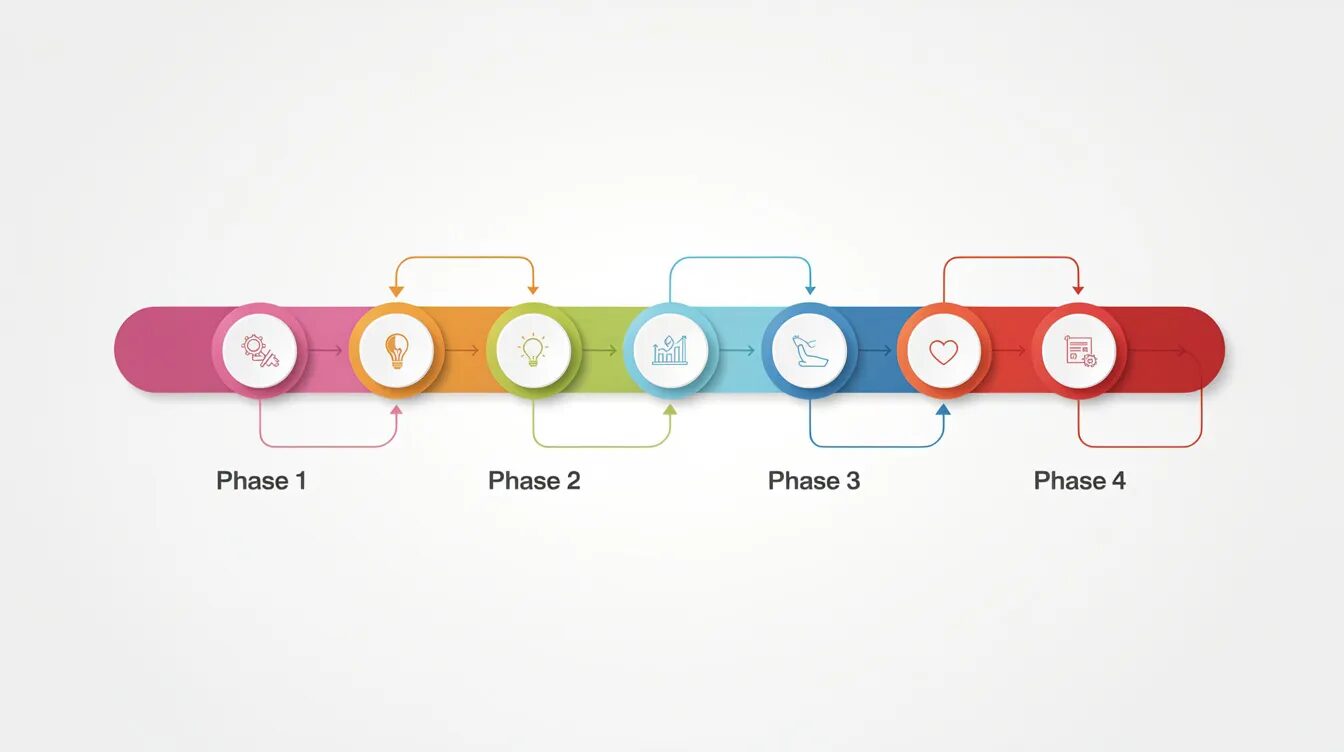
The most useful product due diligence fits inside the normal transaction timeline rather than sitting outside it as an optional extra. In practice, it often works best across three stages.
Stage 1: early screening
Before deeper diligence begins, the investor should establish whether there are obvious product concerns that could affect appetite, pricing, or deal structure. At this stage the review is often lighter: management demo, high-level roadmap review, product walkthrough, early signal checks, and customer-feedback sampling.
The goal is not to produce a final view. It is to identify whether the product itself is likely to be a material diligence topic.
Stage 2: confirmatory product diligence
Once the deal is live, product due diligence should become a defined workstream. This usually includes deeper product walkthroughs, stakeholder interviews, roadmap review, analytics review, architecture-product alignment assessment, and testing of delivery maturity and prioritisation quality.
At this stage, the work should produce decision-useful outputs: core risks, strategic gaps, delivery concerns, upside opportunities, and the implications for value-creation planning.
Stage 3: pre-close and post-deal planning
Strong product due diligence should not stop at a go or no-go recommendation. Its value increases when findings are carried into the first 100-day plan and the wider value-creation strategy. That may include roadmap re-sequencing, stronger discovery discipline, investment in analytics, product leadership changes, or sharper offer definition.
In that sense, product due diligence is not just a transaction filter. It is also a planning tool for how the asset should be improved once capital is committed.
Common red flags in product due diligence
Not every issue is a deal breaker, but certain patterns should prompt closer scrutiny.
Weak adoption of supposed differentiators
If management describes certain capabilities as central to the product story, but customer usage suggests they are rarely used or poorly embedded, that creates risk around product value and messaging.
Roadmap overreach
When the roadmap is broad, politically driven, or disconnected from evidence, it becomes hard to trust the execution story behind the deal. This is especially common where every stakeholder influence becomes a roadmap item and little is clearly deprioritised.
Workflow friction hidden by demos
Products often look strong in curated demos but perform less well when tested through realistic day-to-day tasks. Diligence should identify whether workflow friction is likely to affect adoption, expansion, or retention.
Weak product governance
Where there is no clear decision framework, backlog discipline is poor, and discovery is inconsistent, the product organisation can become reactive. That tends to make delivery slower and product investment less effective.
Misalignment between commercial ambition and product reality
Many investment theses assume product-led growth, move upmarket potential, or expansion into adjacent segments. If the product is not architected, prioritised, or organised to support that move, the thesis may be more fragile than headline numbers suggest.
How product due diligence should feed value creation
The best diligence outputs do more than identify risk. They connect product findings to practical value-creation levers.
That might mean:
- improving onboarding to reduce time-to-value
- tightening product strategy around the most valuable customer workflows
- reducing roadmap noise so execution becomes more predictable
- strengthening analytics so product decisions are evidence-based
- clarifying which integrations or reporting features most directly support retention
- improving governance so product, commercial, and engineering teams align more effectively
When this is done well, product due diligence helps investors move from a generic growth narrative to a sharper plan for how value should actually be created after the deal.
How FoundationState approaches product due diligence
FoundationState treats product due diligence as a structured assessment of whether the product organisation and product direction can realistically support the next stage of growth.
That means looking at:
- product strategy and positioning
- roadmap feasibility and sequencing
- architecture alignment with the intended offer
- discovery quality and prioritisation discipline
- delivery capability across product and engineering
- customer scalability and growth-readiness
The aim is to give investors, acquirers, and boards a clearer view of product execution risk and product upside. In many transactions, that sits alongside technical due diligence rather than replacing it. Technical due diligence explains whether the estate is robust enough to inherit. Product due diligence explains whether the product direction is credible enough to back.
Conclusion
For technology-led businesses, financial diligence and legal diligence are still necessary, but they are no longer sufficient on their own. They explain important parts of the deal, but not whether the product itself can sustain the investment case.
Product due diligence fills that gap. It gives investors a more realistic view of product value, roadmap credibility, execution discipline, and growth-readiness. In many PE and VC deals, that makes it the missing third pillar: the workstream that turns product from a demo topic into a properly tested part of the decision.
The practical question is not whether product due diligence is universally required in every deal. It is whether the product is material to the investment thesis. For most SaaS and technology-led businesses, the answer is yes. When that is true, product due diligence should be treated as a formal workstream, not an informal conversation.